Quarks, Quasars, and Question Marks: The Curiously Challenging Science Quiz

Brains tend to light up when they collide with good questions, and this quiz is designed to trigger exactly that kind of spark. From the tiniest building blocks of matter to the grandest structures in the cosmos, these questions wander across physics, chemistry, biology, Earth science, and a few surprising intersections in between. Expect twists that play with everyday assumptions, facts that sound like science fiction, and scenarios where the least obvious option turns out to be right. This is not about rote memorization or textbook definitions; it is about connecting ideas and noticing how the universe hides its rules in plain sight. Whether you are a lab-coat loyalist or just science-curious, prepare to test how much you truly understand about the strange, elegant logic that keeps reality running behind the scenes.
1
Which gas is chiefly responsible for the characteristic smell after a thunderstorm, produced by lightning in the atmosphere?

2
Which organ in the human body is primarily responsible for regulating blood glucose levels by secreting insulin?

3
What is the main reason Pluto was reclassified from a planet to a dwarf planet in 2006?

4
In biology, what is the primary function of ribosomes inside a cell?

5
Which fundamental force is responsible for holding protons together in an atomic nucleus despite their electric repulsion?

6
In Earth science, what is the primary driving force behind plate tectonics?
7
Which of the following best explains why the sky appears blue on a clear day?

8
Which planet in our solar system has the shortest day, completing a full rotation on its axis in about 10 hours?
9
In chemistry, which statement best describes a catalyst?

10
Which of these electromagnetic waves has the shortest wavelength and highest energy?

0
out of 10
Quiz Complete!
Quarks, Quasars, and the Hidden Logic of the Universe
Science becomes most exciting not when it hands us answers, but when it hands us really good questions. A quiz like Quarks, Quasars, and Question Marks is designed to do exactly that. Instead of checking whether you can recite a definition, it nudges you to connect ideas, challenge your assumptions, and notice patterns that were hiding in plain sight.
On the smallest scales, physics introduces us to quarks, the tiny constituents that combine to form protons and neutrons. They never appear alone in nature; they are always confined in groups, bound by the strong nuclear force. This is already a hint that the universe is not just about things, but about relationships between things. A good question about quarks might ask you to think about why we never see them individually, or how such tiny particles can determine the structure of atoms and, ultimately, of matter itself.
At the opposite extreme lie quasars, brilliant beacons powered by supermassive black holes at the centers of distant galaxies. They shine so intensely that they can outglow the billions of stars around them. Questions about quasars naturally lead to others: How can something that lets no light escape drive such bright emissions? What do these objects reveal about the early universe? By following one question to the next, we begin to see how astronomy is really a history of everything, written in light that has traveled for billions of years.
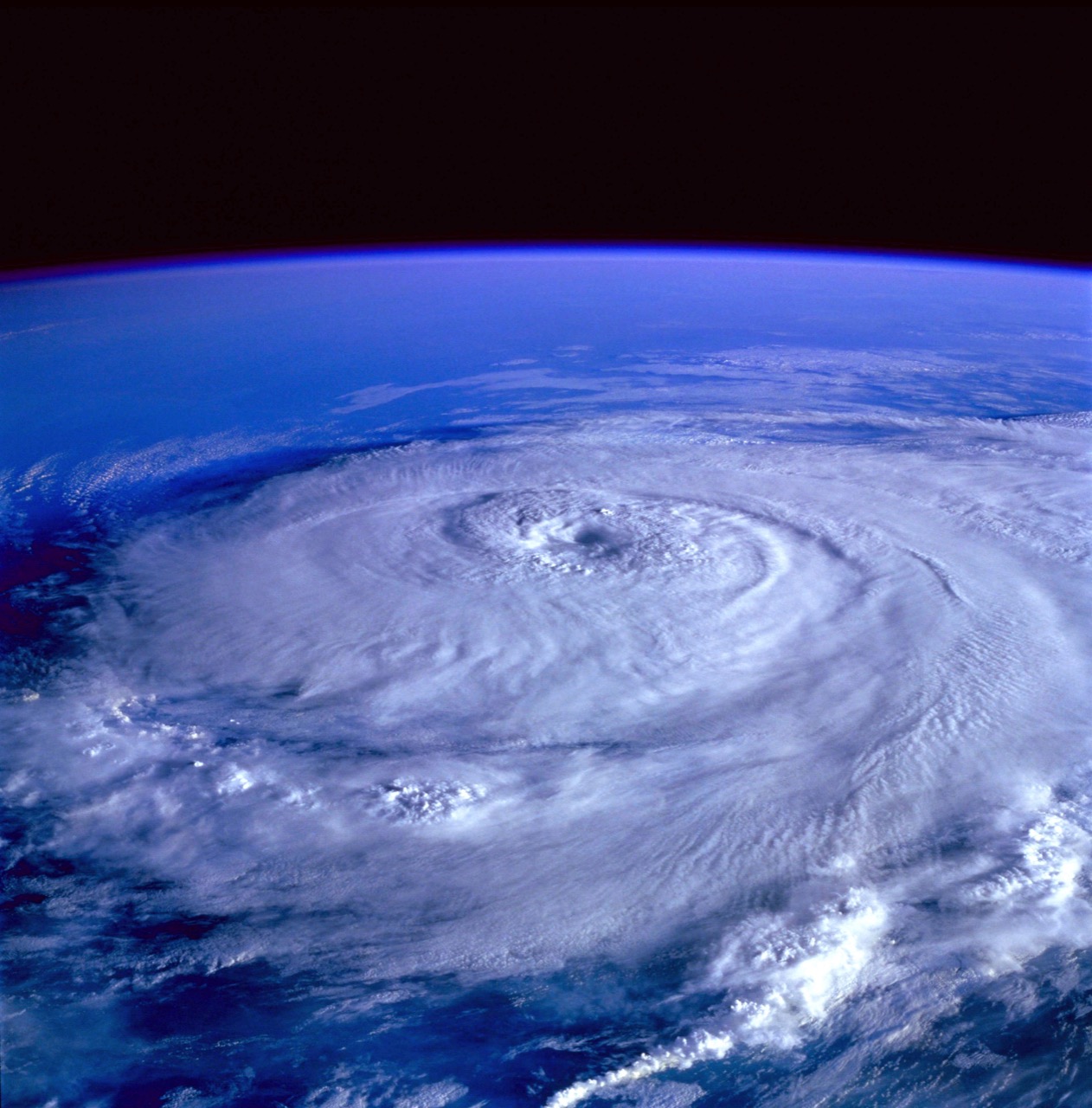
Between these extremes, the quiz roams through chemistry, biology, and Earth science. Chemistry might ask you to rethink everyday substances: why ice floats when most solids sink in their liquids, or why a trace amount of a particular element can change the behavior of a whole material. Biology may challenge your intuition about what makes something alive, how cells communicate, or why some traits persist in populations while others vanish. Earth science might turn a simple weather observation into a puzzle about energy, motion, and the delicate balance of our planet’s systems.
Many of the most interesting questions come from the intersections between fields. For example, understanding climate change draws on physics of radiation, chemistry of the atmosphere, biology of ecosystems, and geology of the Earth’s past. A cleverly designed question can ask about a familiar phenomenon, like a warm night in a city, and use it to hint at larger principles such as the greenhouse effect or the urban heat island.
The twists in this quiz come from the way reality often defies first impressions. The least obvious option is sometimes correct because our everyday experience is limited. We do not directly feel quantum effects, or the curvature of spacetime, or the slow drift of continents, yet these hidden processes shape everything around us.
Ultimately, a curiously challenging science quiz is an invitation to think like a scientist. It rewards curiosity, pattern recognition, and a willingness to change your mind when the evidence points in a new direction. Whether you work in a lab or simply enjoy wondering how things work, these questions offer a chance to see the strange, elegant logic that keeps the universe running behind the scenes.